More to See >>
Memorial Service | John Doerner
Remembers |
Osteogenesis Imperfecta
Foundation
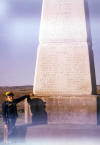
Douglas Keller, June 1985
It’s always very
difficult to report the sad news of a friend passing away. It’s especially
hard today. Douglas Keller, “Little Big Man” as all his friends
affectionately called him passed away at his home in Arkansas on Sunday,
April 24, 2005 (one day after his 41st birthday).
Doug had spent the
past 14 years as a park ranger, then park historian at Pea Ridge National
Military Park, Garfield, Arkansas. Before that he was curator at Bent’s
Fort. And, before all that, there was Custer Battlefield National Monument.
I first met Doug in
June 1983. I had just made the drive from Denver to the battlefield in a
record 6.5 hours. As I walked up to the visitor center I heard a huge,
booming voice of a man coming from the patio. It was a ranger giving a
battle talk. The voice was impossible to ignore; it was passionate and
spoke with confidence. As I approached the patio, I was surprised to find
that the booming voice was coming from a young man who leaned on a cane
and stood only about four feet tall. It was Doug Keller.
Anyone listening to
Doug present his views of the Custer fight knew Doug was as knowledgeable
as they could come. After Doug completed his talk, I waited until all the
visitors had finished with their questions and then approached him. I
introduced myself and told him how impressed I was with his work. He
returned my compliment with a big smile, reached out and we shook hands.
It was a beginning of a close friendship.
During our
conversation, we were even more surprised to learn that we lived only 15
miles from each other in Colorado. Doug was a student at the University of
Northern Colorado where he would graduate with a degree in history. We
agreed to get in touch with each other when Doug returned home at the end
of the season.
We did. Either at
his home, or mine, we spent hours discussing the Custer fight and other
stories of the Plains Indian Wars. My kids adored him and showed respect
for him. This was an unusual experience for Doug. The only thing that
bothered him were children's stares.
Doug suffered from
Osteogenesis Imperfecta (OI),
commonly known as brittle bone disease. A simple fall could easily break several bones. Nearly every bone in
his body were broken when he was born. Extremely caring and giving parents
raised Doug. Charles and Becky Keller shared an understanding with their
son that, even with his disease, he could still
accomplish all of his dreams. And, Doug did.
In August 1983, a
plains fire swept over the battlefield. Doug and his fellow rangers
helped save the visitor center from the flames by turning on the
garden hose and pouring water over the building. Doug
called me as soon as he could to tell me the news. It was unreal he said;
the battlefield looked completely different.
Doug couldn’t wait
to show me the fire's effect on the battlefield, so he and I hit the road in October 1983 for a
quick weekend trip. We arrived about 2 p.m., went inside and talked with
Chief Historian Neil Mangum and other staff. Neil told Doug he’d have to do the 4 p.m. battle
talk, which Doug was more than happy to comply. But, first, Doug wanted to
take me down Deep Ravine Trail.
It had been raining
for days. The battlefield was muddy and slippery. I asked Doug if he
really wanted to go down there – it didn’t look safe. I could look real
quick, I told him, but he was anxious to see it for himself. We made about
30 yards down the trial, with me in the lead, when I suddenly heard a very
loud crack. It sounded like someone had snapped a thick piece of wood in
two. I turned around to find Doug on the ground with his left leg bent
under him.
I could tell he was
in extreme pain. Doug looked up at me and calmly told me not to move him,
but to hurry to the visitor center, get Neil, and call an ambulance. I’ll
never forget Doug’s words, “I know my body better than even the doctors.
I’ve broken my femur. This doesn’t look good.”
I ran to the
visitor center to find that Neil and other staff were still in his office.
I told them what happened. They didn’t believe me! “This is a joke,
right?” Neil asked. Just 10 minutes earlier all of us had been cracking
jokes.
When the
realization set in that it wasn’t a joke, an ambulance was called. A
person with brittle bones needs professionals handling them in cases like
this. It was late evening before Doug was finally transported from the
clinic at Crow Agency to the hospital in Billings.
Words cannot
express the sadness I felt seeing Doug in the hospital. His parents were
on their way from Colorado. I was so depressed that I returned home the
next day not even stopping at the battlefield.
Like all cases such
as this that Doug experienced, he handled them honorably. What a brave
young man he was.
It was June 1985
when Doug and I climbed into his car to start the drive from Colorado to
the battlefield. We’d be working there together and sharing apartment A on
site. That summer, working at the battlefield with Doug, was an incredible
experience; one that I’ll treasure for all of my life.
Every workday, Doug
and I would start at Neil Mangum’s office to see
what projects he might have for us to work on, and to check the program
schedule for our battle talks.
One morning found
us in for a very interesting day. Neil told us that he had some film
producers due there by 9 a.m. to take a tour of the battlefield. They were
in pre-production for the made-for-television movie, “Son of the Morning
Star.”
The producers
arrived before Doug and I left the office. Turns out we were surprised to
find the teleplay was to be written by Melissa Mathison, then wife of
Harrison Ford. We were really shocked to see that Ford and their friend,
songwriter
Jimmy Buffett had come along for the ride.
After Neil and the
producers left the office just Doug and I remained in the room with Ford
and Mathison. We struck up an interesting conversation about the battle
and most specifically, art of the battle. I told Doug that Melissa was
a great screenwriter and that she wrote the screenplay for the film, “E.T.”
– I’ll never forget; Doug’s smile just beamed and he said to Melissa,
“E.T. is my favorite movie.”
Later that summer,
after I returned to my regular day job, Doug told me that Melissa came
back to spend several days researching for her teleplay. Doug was curator
then, so he and Melissa spent each day together in the archives. It was
the highlight of Doug’s summer.
During our summer
as roommates, we’d spend each evening either at Last Stand Hill, or
Calhoun Hill, or Reno-Benteen Battlefield just sitting, talking, and listening to the
trains running along the tracks beside Interstate-90. It was a peaceful
time; our friendship grew.
On our days off
we’d head up to Billings. Our routine was to go to McDonalds for lunch,
walk around the mall, and then catch a movie (believe me folks, in 1985
that was about the only choice for entertainment and food in Billings).
Chris Summitt would usually join us as well. Chris was another ranger that
everyone envied – he gave the most dramatic battle talks. He knew how to
keep visitors on the edge of their seats.
It never failed.
Each time we went to Billings strangers would come over to us and tell us
they saw us give a battle talk. They always came to Doug first. It was
awesome to see Doug beam with pride.
In 1988, Doug
applied for a position as museum
technician at Bent’s Old Fort National Historic Site, La Junta, Colorado.
Doug asked me if I’d be a reference for him. “Of course, I would,” I said.
I didn’t expect a phone call, but one finally came from the superintendent of
the fort. We talked a long time about Doug’s qualifications – that was
easy when one expressed their thoughts about Doug. Doug got the job.
It was difficult
to see Doug leave, but I was very proud of him. We would not see much of
each other after that. I was busy; Doug was hundreds of miles away. But,
we stayed in touch for a while.
I know he wanted
to return to Little Bighorn someday. It never happened, but in my heart I
will always remember him there. In a way, at least in my way, he has
returned there.
God bless his
soul,
Bob Reece
Photos below provided
by Bob Reece
|
|
|
|
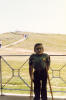
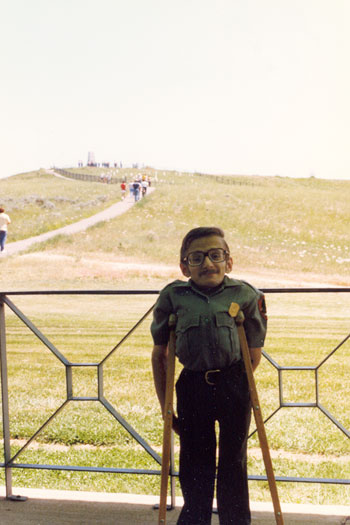
Keller proud park ranger at LBH -- June 1984
|
|
|
|
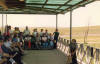
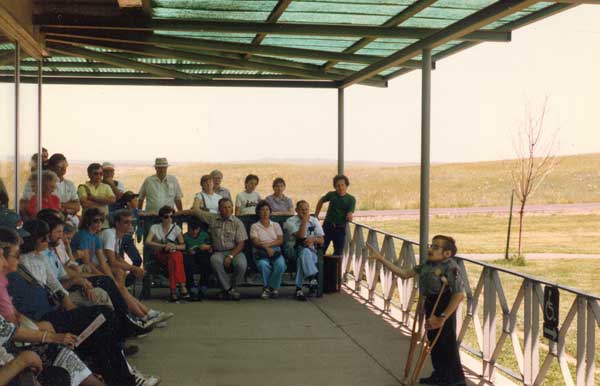
Keller giving a battle talk on the visitor center patio at LBH -- June 1984
|
|
|
|
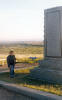
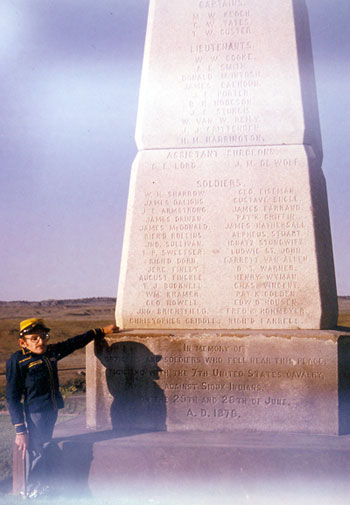
Keller at the Reno-Benteen Monument -- June 1985
|
|
|
|
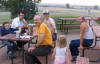
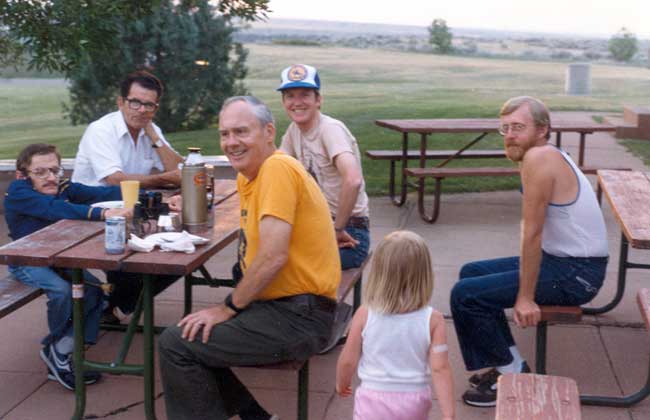
Staff cookout July 1985. Table front: Keller and Al Jacobson; rear: John Parley and Bob Reece. Cliff Nelson sits alone; a young Megan Reece runs by.
|
|
|
Recent photos below
provided by Steve Black of Pea Ridge Battlefield
|
|
|
|
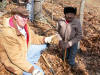
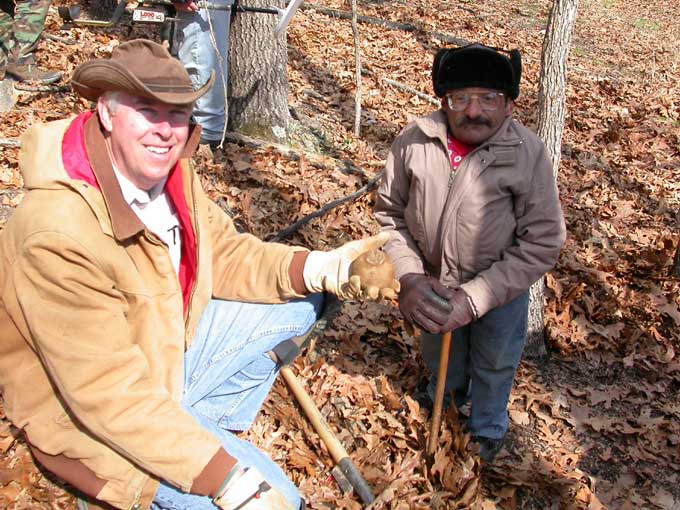
Doug with an unidentified archeologist
|
|
|
|
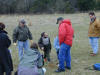
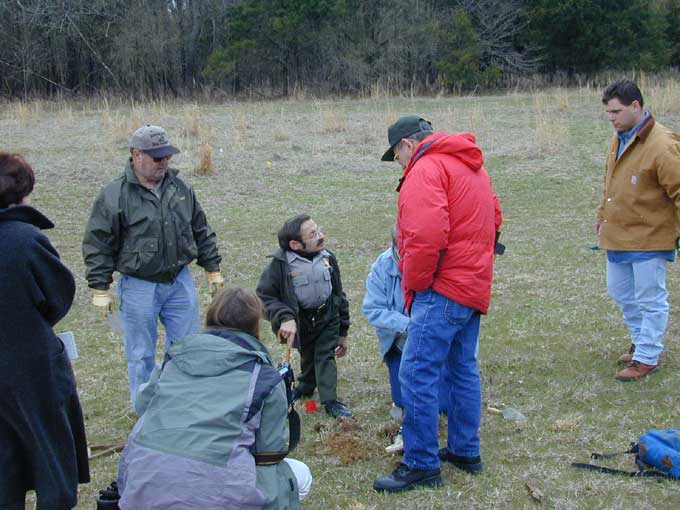
Doug speaking with Dick Harmon in the red parka. Dick is a well known expert on the Indian weapons at Little Bighorn
|
|
|
|
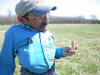
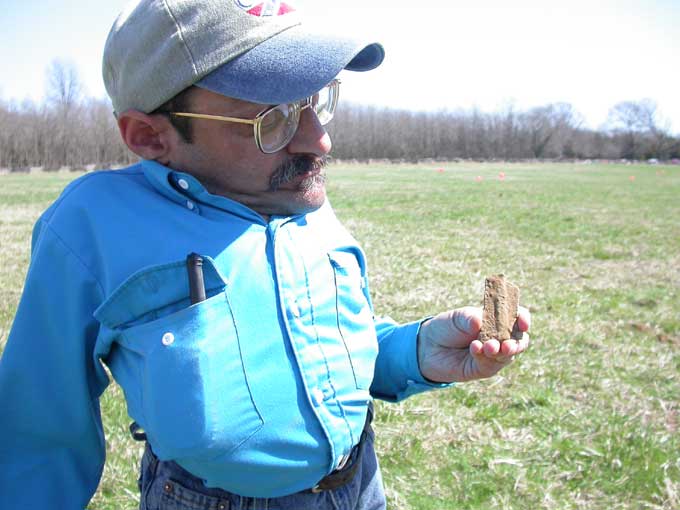
Doug admiring a Pea Ridge battle related artifact
|
|
|
(Back
to Top)
|

 |
|